
Data use control for AI agents
Control what
reaches the model.
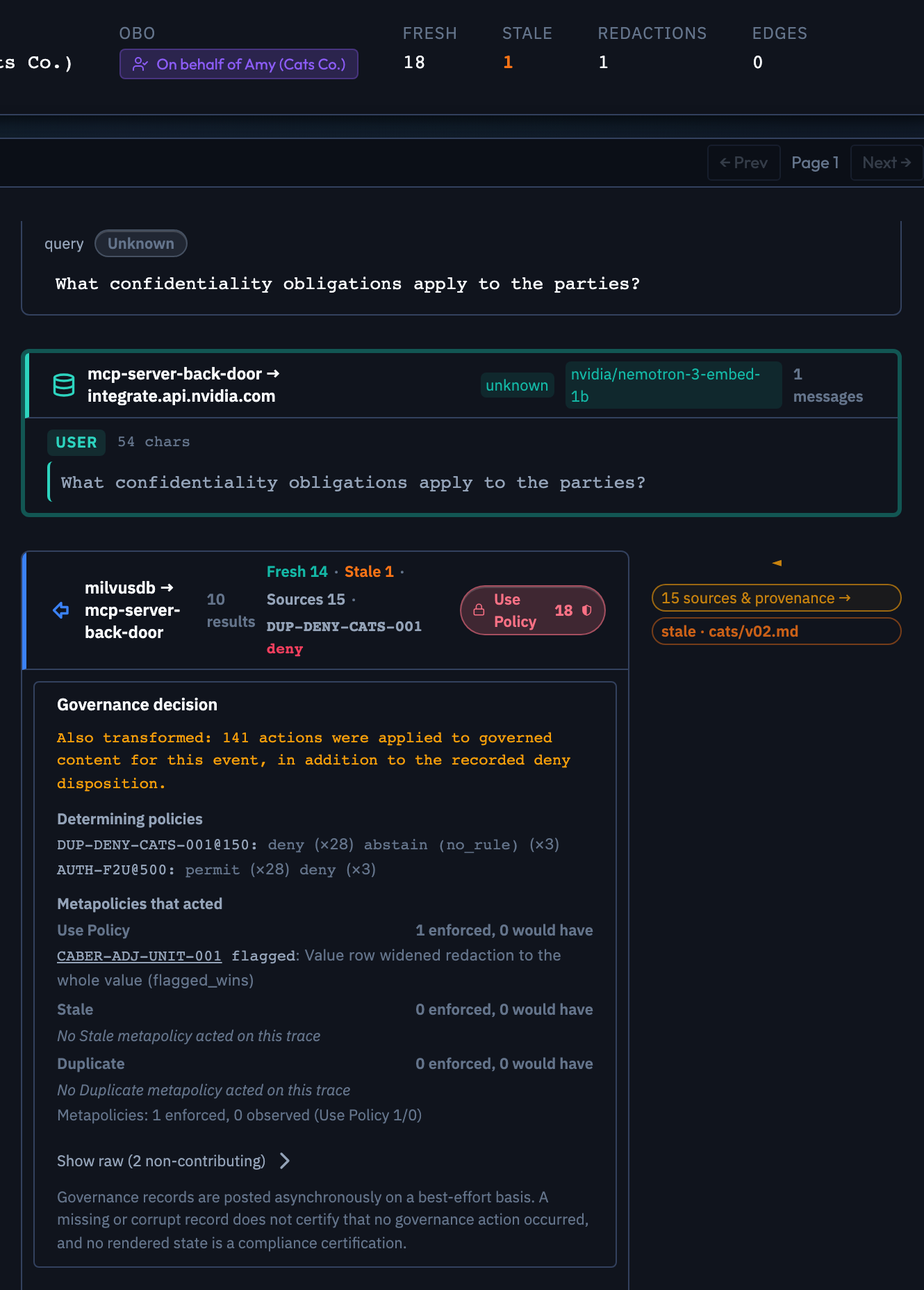
Caber links copies of enterprise content across systems and evaluates freshness and data-use policy on each fragment before the model sees it.
One passage.
Different rules.
AI agents turn longstanding problems with stale and overshared enterprise data into recurring cleanup work for engineers.
A recently edited ticket can quote a superseded runbook. A broadly shared wiki can contain text from a restricted file. Retrieval typically returns one copy, while the evidence engineers need to assess freshness or acceptable use may live elsewhere.
How Caber works
Read the docsLink matching content
Fingerprint overlapping fragments roughly a sentence long. Link known copies by content across files, API responses, and agent tool calls.
Resolve source context
Associate each occurrence with its owner, access controls, timestamps, and byte ranges. Order related documents into a version history (beta).
Enforce before inference
Run compiled Rego in process using source context, the requesting user, and the purpose of the request. Release, mask, replace, or withhold individual fragments.
Trace the decision
Inspect source evidence and the deciding policies in the Console. Link fragments delivered to the model to its output (beta).